
a·poth·e·o·sis
noun
- the highest point in the development of something; culmination or climax.
- the elevation of someone to divine status; deification.
The period of the French & American Revolutions has been donned by scholars “the illuminated century.” (Rousseau And Revolution, Will & Ariel Durant) Technology was beginning to change the narrative about mans relationship to nature and to god. The recent invention of hot air balloons was perceived as a symbol for the apotheosis of man, who was no longer bound to the limitations of the old world. His enlightenment has enabled him to build his own chariot to travel the skies with, chasing the old gods out of their palaces. In his poem “Prometheus,” Goethe (who’s famous last words were “more light!”) illustrated this Luciferian ambition bluntly:
“I know nothing poorer under the sun than you, O gods! From sacrifices and votive prayers, you nourish your majesty with difficulty. And it would starve, were not children and beggars such hopeful fools”
Johann Wolfgang von Goethe – Prometheus
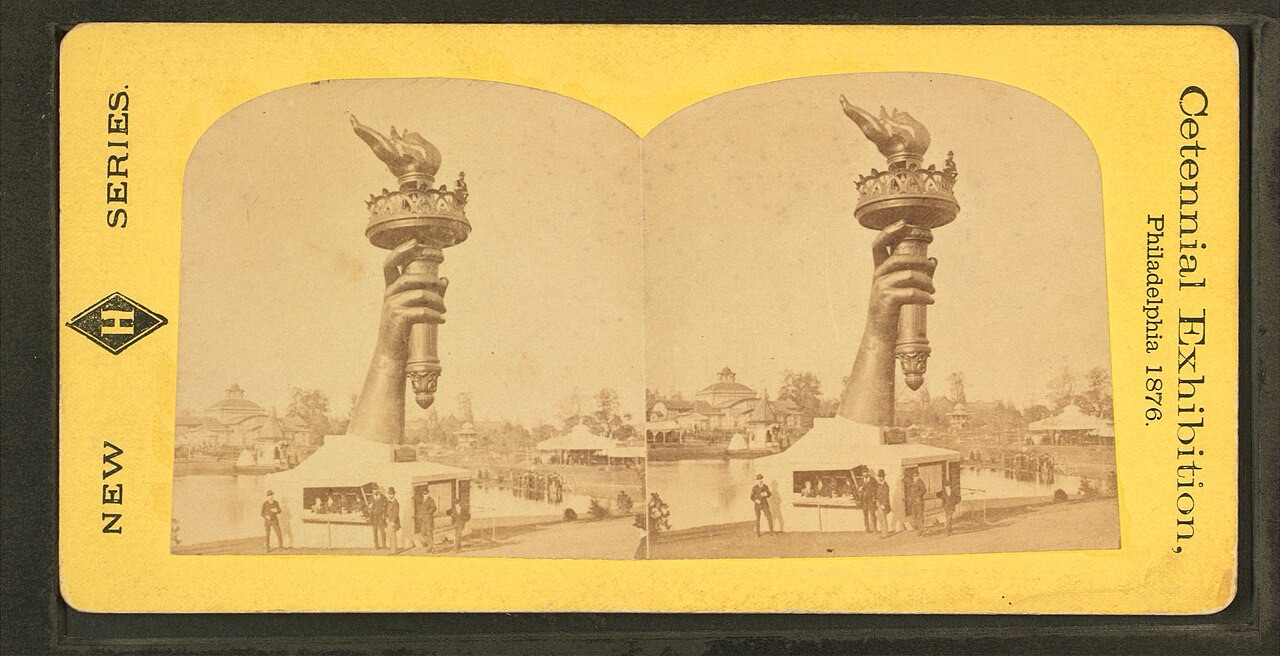
This poem was named after Prometheus, who rebelled against the gods by bringing their divine fire down to earth, where man himself could hold the blazing torch of light, becoming a god in his own right. These men viewed themselves as serving this light, which led man from an animal state to apotheosis. This was the torch that kindled the revolutions in France and America, the same torch held high by the statue of liberty (a gift from France to America celebrating their successful overthrow of the old order), and the same torch engraved on Mesmer’s tombstone (see previous post on Mesmerism for photos).
The characters in the story of Mesmerism involve key leaders of both revolutions, on both sides of the debate. Benjamin Franklin & Thomas Jefferson railed against Mesmerism in the United States. Lafayette, who participated (understatement) in both revolutions, strongly believed in Mesmerism, but kept that belief private & only shared it with fellow Masonic revolutionaries. George Washington wrote Mesmer the following about Lafayette:

George Washington clearly shared Mesmer’s sentiments about the (re)discovery of Magnetism being a gift to humanity. Mesmer saw himself as healer first & foremost. He criticized western medicine for using drugs to treat symptoms rather than truly healing the sick. He ends his manifesto by declaring “I wish to devote what remains of my existence ‘to the sole practice’ of a method which I recognizer as being eminently beneficial, of being able to preserve my fellow man so that he no longer need be exposed to the incalculable hazards of drugs and their application.” I can’t help but feel that he was ahead of his time.
Mesmer’s ideas flourished in underground societies, Masonic and otherwise, but were met with resistance in academia, which was still largely controlled by Jesuits, the rival order of the Illuminati. Mesmer was educated by Jesuits at Ingolstadt University, along with the infamous Adam Weishaup, founder of the Bavarian Illuminati. Mesmerists did not hesitate to speak of the ‘conspiracy of academia’ and the ‘cabal’ who controlled it and directed the scientific narrative in favor the ruling class. Once again, I can not help but feel that he was ahead of his time.
To Mesmer there were no metaphysics, only physics that had not been fully understood. Over a century before Einstein coined the term “spooky action at a distance,” Mesmer wrote of how objects separated by time & space could affect each other through magnetism.
Mesmer mainly spoke of his discoveries as developments in medical technology that would contribute to the healing of humanity. However his peers were eager to use Animal Magnetism in occult experiments and even political plots. Some plots went as far as attempting to “imprint mesmerically on the king’s mind” certain political agendas, essentially remote controlling the king through Mesmerism. (Mesmerism and the End of the Enlightenment in France, Robert Darnton, pages 130-131)
Mesmer wrote about changing the world through healing, he was not vocal about politics, although his friends and followers were more than vocal. The Italian Revolutionary Gioacchino Prati “made a pilgrimage to visit Mesmer” before embarking on his revolutionary career, as documented in this passage from James Billington’s monumental work on the occult influences of revolutionary politics:

Mesmer did not claim any religious affiliation, he wrote in purely secular terms. To him Animal Magnetism was as much a part of the mechanics of nature as Newtonian physics. He felt that religion and superstition were only possible in the past because mankind did not understand the laws of nature, and was therefore misled by those who did. The priesthood wielded power over their followers through hypnosis & manipulating magnetism, claiming to be agents of the gods. Mesmer believed that a scientific understanding of magnetism would render this a thing of the past. ‘Spiritual phenomenon’ would be seen as a natural part of the physical world and would not be attributed to supernatural beings. Thus the Illuminist dream of toppling the religious & social hierarchy would be realized once and for all. This illustrates the paradox of illuminism. Opposing religion & superstition while focusing on strict moral development & occult science. This only appears as a contradiction to the uninitiated.
Leave a Reply